Essential oils are a wonderful way to support your wellbeing naturally, but like all natural products, it's important to use them safely. One safety topic that often causes confusion is phototoxicity.
Let's take a closer look at what it means and which oils you need to be aware of.
What Does Phototoxic Mean?
The word phototoxic comes from two parts:
Photo = light
Toxic = harmful
When certain essential oils are applied to the skin and that area is then exposed to sunlight or UV light, a reaction can occur. This reaction is known as phototoxicity.
A phototoxic reaction can look similar to a sunburn and may include:
Redness
Burning or stinging
Blistering in more severe cases
Skin discolouration that can last for weeks or even months
The severity depends on several factors, including:
The type of essential oil used
How much was applied
Whether it was properly diluted
Your individual skin sensitivity
The intensity of the UV exposure
How long your skin is exposed to the sun
Even when an essential oil is diluted, phototoxicity can still occur if it exceeds safe dilution levels.
Why Does It Happen?
Phototoxicity is caused by naturally occurring compounds called furanocoumarins, which are found in some citrus essential oils—particularly those that are cold pressed from the fruit peel.
When these compounds absorb UV light, they can damage skin cells, leading to the reactions described above.
Phototoxic Essential Oils
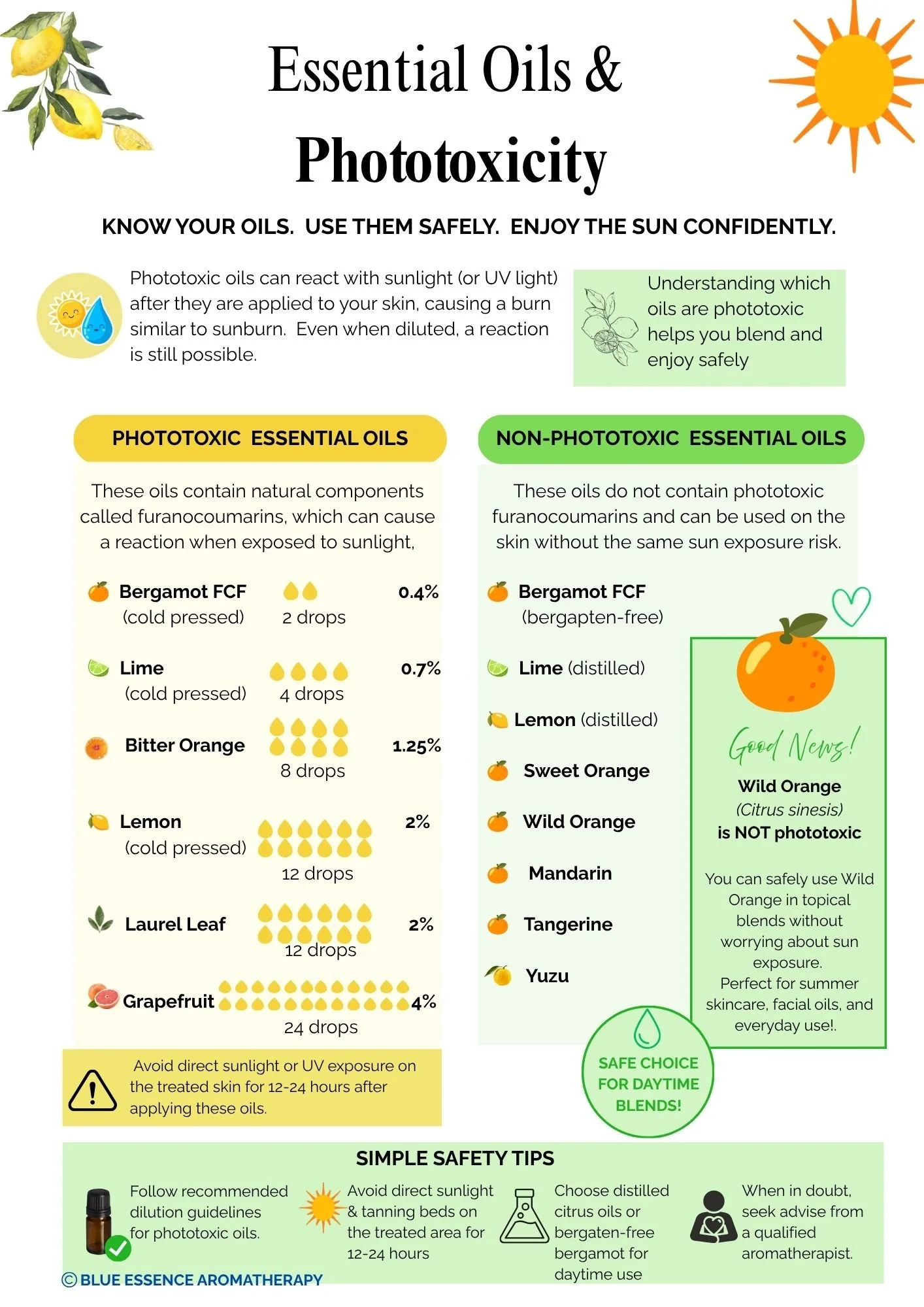
The following essential oils have recommended maximum dilution levels for leave-on skin products. (Note this is not a full list but just covers some of the common essential oils).
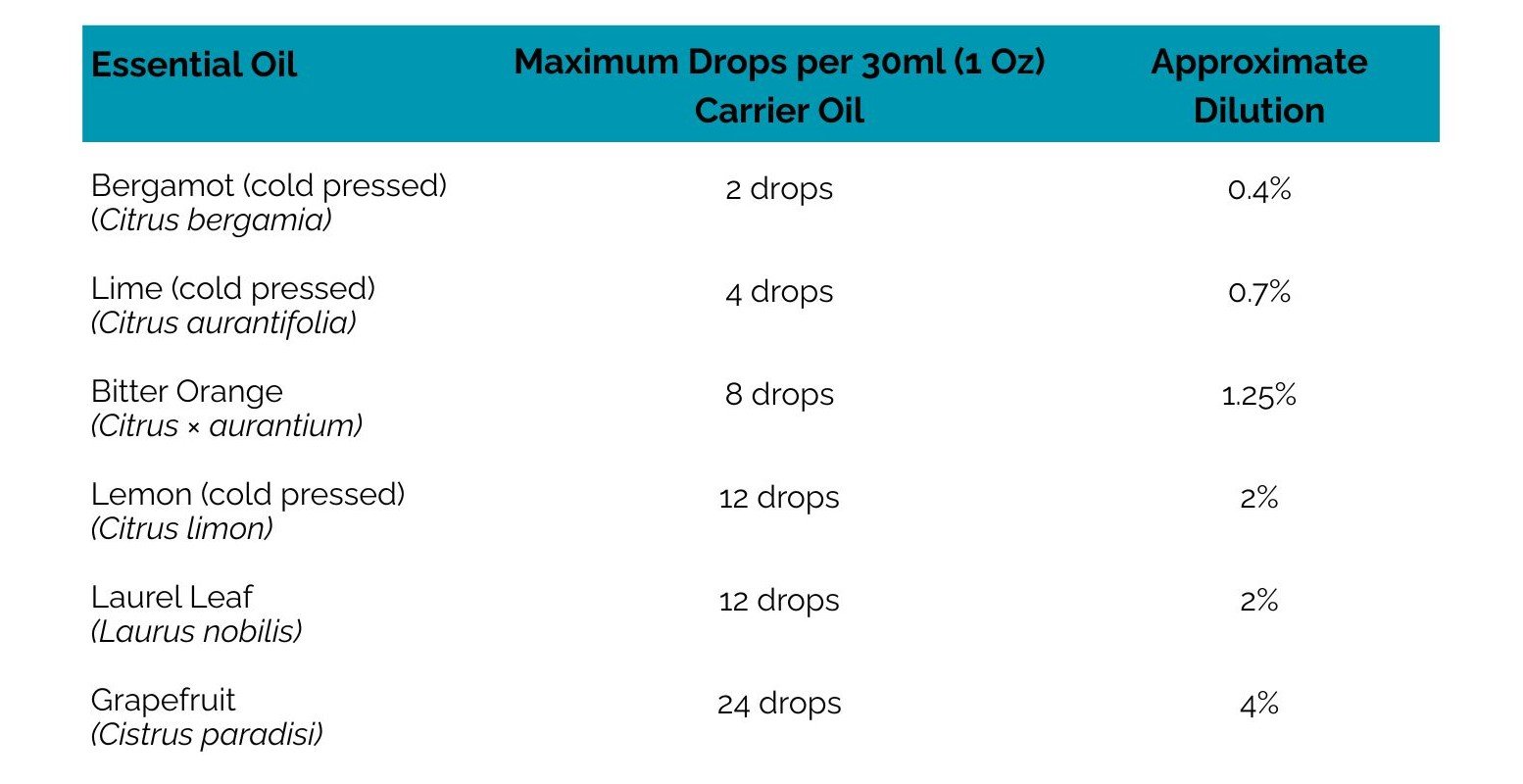
These limits are based on internationally recognised safety recommendations for leave-on topical products.
Essential Oils That Are Not Phototoxic
Fortunately, many citrus oils can be enjoyed without the same concern.
These include:
Bergamot FCF (bergapten-free) (Citrus bergamia)
Distilled Lime (Citrus aurantifolia)
Distilled Lemon (Citrus limon)
Sweet Orange (Citrus sinensis)
Wild Orange (Citrus sinensis)
Mandarin (Citrus reticulata)
Tangerine (Citrus reticulata)
Yuzu (Citrus junos)
A Common Myth: Is Wild Orange Phototoxic?
One of the biggest misconceptions is that all citrus essential oils are phototoxic.
This isn't true.
Wild Orange (Citrus sinensis)—also known as Sweet Orange—is not phototoxic. Unlike cold-pressed bergamot, lemon, lime, and grapefruit, Wild Orange contains little to no phototoxic furanocoumarins.
That means you can confidently include Wild Orange in:
Facial oils
Body oils
Massage blends
Summer skincare recipes
Aromatherapy rollers
without worrying about normal sun exposure causing a phototoxic reaction.
Simple Safety Tips
If you're using a phototoxic essential oil:
Always follow recommended dilution guidelines.
Avoid direct sunlight and tanning beds on the treated area for 12–24 hours after application (24 hours is the most cautious recommendation).
Consider choosing distilled citrus oils or bergapten-free bergamot if your blend will be used during the day.
When in doubt, seek advice from a qualified aromatherapist.
The Bottom Line
Phototoxicity isn't something to fear—it simply means understanding which oils require a little extra care.
By knowing which essential oils are phototoxic and using them appropriately, you can enjoy all the wonderful benefits of aromatherapy safely and confidently.
Natural doesn't always mean risk-free, and a little knowledge goes a long way in helping you use essential oils wisely.